NBA Parlay Picks Today UK
 Available in US
NBA Same-Game Parlays: UK Bet Builder Strategies
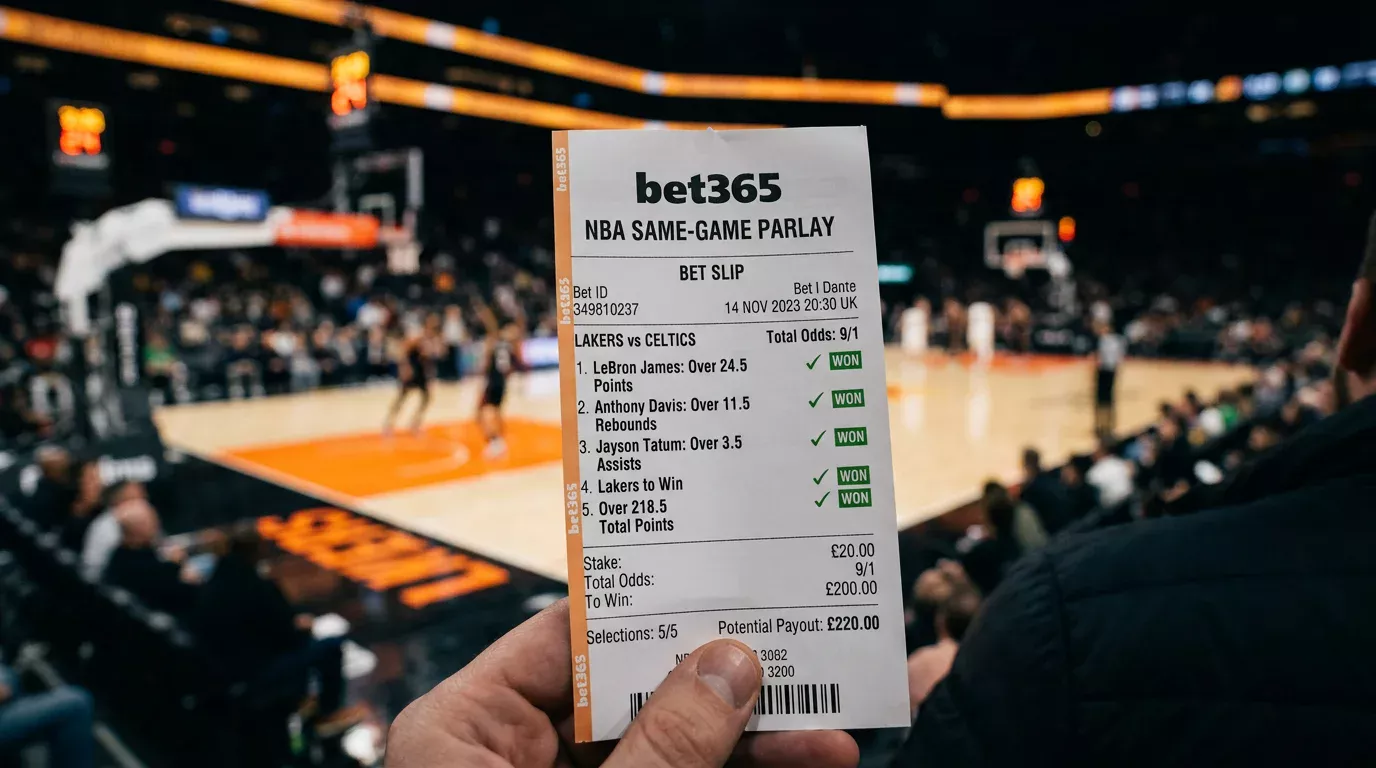
I remember the first time I put together a same-game parlay and felt genuinely clever about it. Four legs, all pointing in the same direction, odds that looked exciting. The bet lost, as they often do, but the reason it lost was more instructive than the loss itself — I had not thought carefully about how the legs interacted with each other, and I had paid a significant premium for the privilege of combining them.
On UK platforms, this market is called the “bet builder.” On US platforms it is the “same-game parlay” or SGP. The mechanics are identical: you combine multiple selections from the same game into a single bet, with each additional leg multiplying the odds. The key difference from a standard accumulator across separate games is that your selections are not independent — they all derive from the same match, and that creates complex correlations that most bettors ignore entirely.
Understanding those correlations is the single most important skill in NBA bet builder construction. Without it, you are essentially paying inflated odds for a combination that the bookmaker’s model has already priced against you.
Positive and Negative Correlation: The Hidden Rule of SGP Construction
Correlation in bet building refers to the relationship between your selected outcomes. Positive correlation means two outcomes tend to happen together — when one occurs, the other becomes more likely. Negative correlation means they work against each other.
A classic positively correlated NBA bet builder: a high-scoring favourite to win by a large margin + a high points total for the game. If the favourite runs up the score, both legs benefit from the same underlying outcome. The problem is that bookmakers identify and limit positive correlation — the odds boost you receive for combining these legs is much smaller than the mathematical product of their individual probabilities. The platform is charging you a margin for the convenience of the combined bet, and that margin is highest precisely where correlation is strongest.
The sharper approach is to seek combinations where the correlation is approximately neutral — outcomes that are somewhat independent within the same game. A player’s assists total, for example, correlates loosely with team performance but is more driven by individual usage patterns and matchup. Combining a team spread with an opponent player’s under on points can be neutral or even mildly negatively correlated, and these combinations tend to receive less aggressive pricing treatment from the bookmaker.
Applying machine learning research to understand which statistical features predict player and team outcomes — the kind of modelling that shows 65-80% accuracy is achievable in NBA game prediction — makes it clearer which combinations are genuinely complementary rather than artificially bundled. The reference guide on NBA player props methodology covers the matchup analysis that underpins this approach.
How Many Legs Is Optimal? A Practical Framework for UK Bet Builders
Every additional leg multiplies both the potential payout and the bookmaker’s margin. Three legs is the sweet spot for most analytical bet builders — enough to generate meaningful odds, but not so many that the cumulative margin destroys any edge you might have found.
Two-leg bet builders are sometimes available but the odds enhancement is marginal. Five or more legs is gambling on entertainment, not edge. The probability of hitting five independent predictions in a single game, even at 65% accuracy per leg, is around 12%. The odds would need to be substantially above that probability to represent value, and they rarely are because the bookmaker prices multi-leg combinations with increasing margin at each step.
For practical UK bet building, I work to a rule: three legs maximum, all based on separate analytical inputs, none obviously positively correlated. If I cannot identify three legs that meet those criteria for a given game, I do not build the parlay. There is no obligation to use the bet builder market just because it exists.
Four Bet Builder Traps That Inflate Odds and Kill Returns
Experience has given me a clear list of traps to avoid, and sharing them here saves you several losing bets worth of tuition fees.
The first trap is stacking the favourite. Combining a team to win + spread cover + game total over is essentially three expressions of “this team dominates.” The positive correlation is high, the bookmaker’s margin is correspondingly punishing, and the apparent odds attractiveness is an illusion. Spreading your legs across less correlated outcomes produces better long-run value even if the headline odds look less exciting.
The second trap is chasing round-number prop lines. When a player’s points line is set at exactly 25.5, that number has been precisely calibrated by the bookmaker. Adding it to a bet builder as if it represents easy value is a mistake — if anything, heavily marketed prop lines are more accurately priced, not less, because they attract attention and therefore more pricing scrutiny.
The third trap is including legs you are not confident about purely to boost the odds. Every low-confidence selection dramatically increases the probability of losing the entire bet. If you only have genuine conviction on two legs, bet those two legs separately rather than adding a speculative third to improve the payout.
The fourth trap is ignoring late lineup news. NBA same-game parlays are constructed hours before tip-off, but player availability reports continue updating until close to game time. A bet builder built around a player who is ultimately ruled out is lost before tip-off. Check injury reports as close to your cut-off time as possible before confirming any bet builder that includes player performance legs.
Why does a same-game parlay on NBA typically offer lower odds than a regular accumulator across separate games?
A same-game parlay involves outcomes from the same match, which means they are correlated rather than independent. Bookmakers account for this correlation by applying a margin to the combined odds — the boost you receive for adding each additional leg is smaller than the mathematical product of the individual probabilities. A regular accumulator across separate games involves genuinely independent events, so the odds multiplication is closer to the true combined probability, though the bookmaker margin still applies.
Can I include player props and spread in the same NBA bet builder?
Yes, most UK bookmakers allow combinations of team spread, match totals, and individual player performance markets in the same bet builder. The key consideration is correlation — combining a team spread win with a player from that team going over their points line is positively correlated, which the bookmaker will price conservatively. Mixing spread outcomes with player stats from the opposing team tends to carry lower correlation and therefore slightly less aggressive pricing treatment.
Published by the nba Bets of the day team.