NBA Back-to-Back Betting Strategy UK
 Available in US
- Analyzing the NBA Schedule for Betting Value
- What Counts as a Back-to-Back in the NBA Regular Season
- The Statistical Case: How Rest Disadvantage Shows Up in Results
- How Bookmakers Price Back-to-Back Games — and Where They Get It Wrong
- Coach Rotations on Second Nights: Reading the Pre-Game Signals
- Totals and Pace on B2B Nights: The Over/Under Adjustment
- Road vs Home B2B: When the Travel Multiplier Kicks In
- Building a Simple B2B Betting Filter: A Practical Framework
- Back-to-Back Betting Questions From UK NBA Punters
Analyzing the NBA Schedule for Betting Value
I have had the same conversation dozens of times with UK bettors who are analytically serious about NBA wagering. They study efficiency ratings, read injury reports, compare bookmaker lines, and still wonder why certain stretches of the season feel like their models go wrong in a consistent direction. When I ask whether they are accounting for back-to-back scheduling, the answer is almost always no, or they acknowledge it in a vague way without actually adjusting their analysis.
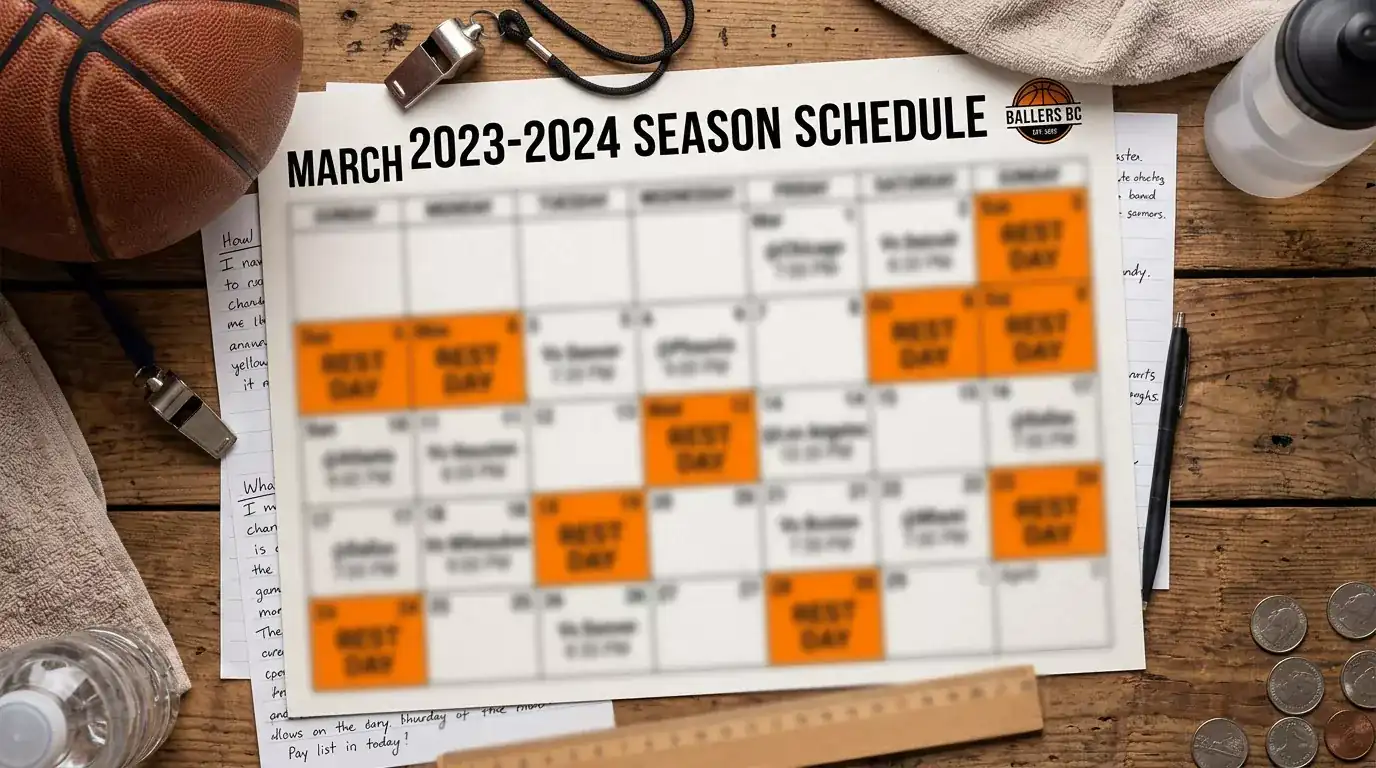
The NBA regular season is 82 games compressed into roughly seven months, and the schedule is structured with a density that no other major professional league matches. Teams play on consecutive nights multiple times per month during peak stretches of the season. A back-to-back: two games in two consecutive days, is not an unusual occurrence. It is a routine feature of the NBA calendar that the schedule makers build in deliberately, and it creates systematic performance differentials that the betting market prices incompletely.
That incompleteness is the opportunity. It is not a guaranteed money printer — nothing in betting is — but the scheduling factor is the most consistently documented structural edge available to NBA bettors who do the basic homework of checking a team’s next five games before placing a bet. The research is public. The schedule is public. The lines are set by bookmakers who are balancing dozens of markets simultaneously and cannot price every back-to-back situation with perfect accuracy. That gap is where disciplined bettors find value.
Fatigue often shows up late in the game, making these spots perfect for applying NBA in-play betting strategies during the second half.
What Counts as a Back-to-Back in the NBA Regular Season
A back-to-back in NBA terminology means a team is playing their second game in two consecutive calendar days. If Team A plays in Boston on Monday night and then in Miami on Tuesday night, Tuesday is their back-to-back game. The Monday game is “game one,” played with full rest. The Tuesday game is “game two,” played after travelling and recovering from the previous night’s contest.
The NBA schedule typically includes around 15 to 20 consecutive-night sets per team per season during the regular season. Some teams carry heavier back-to-back loads than others depending on their geographic location and conference travel demands. Western Conference teams often face more coast-to-coast travel requirements, which amplifies the fatigue component of certain fixtures. A team based in Los Angeles playing the second night of a schedule double in New York has absorbed a three-hour time zone adjustment on top of the physical recovery deficit from the previous game.
It is worth distinguishing between the “home B2B” and the “road B2B.” A team playing the second night at home has eliminated the travel variable. They slept in their own city, used their own practice facility, and only need to manage the physical recovery component. A team playing the second night away has added a red-eye flight, a hotel, and a new time zone to their recovery equation. Road back-to-backs are meaningfully worse for performance than home ones, and that distinction matters for the size of the adjustment you should apply.
The NBA also produces “three-in-four” and “four-in-five” stretches (three games in four nights, or four in five nights) that create cumulative fatigue effects beyond any single back-to-back. These extended schedule clusters are worth flagging because a team on game three of a four-in-five stretch is operating under significant accumulated fatigue even if their most recent game was not technically a back-to-back.
The Statistical Case: How Rest Disadvantage Shows Up in Results
The data on back-to-back performance degradation is consistent across multiple seasons and multiple analytical approaches. Home teams in the NBA win approximately 58% to 60% of regular-season games and cover the spread at a slightly lower rate — the spread already prices in the quality differential, but when you isolate games where the visiting team is playing a second consecutive night on the road against a rested home side, the performance degradation of the fatigued team becomes measurable and material.
Teams on the second night of a road back-to-back perform worse on both offensive and defensive efficiency metrics compared to their season averages. The effect size varies. Some studies peg it at two to four points on the spread, others find more modest effects, but the direction is consistent. Point differentials widen in favour of the rested team. Scoring volume drops for the fatigued side, particularly in the fourth quarter when accumulated fatigue becomes most acute.
The OKC Thunder’s 64% ATS coverage rate at home over a 2.5-season stretch is an example at the extreme end. No team maintains that rate permanently, but it illustrates how home court advantage compounds with scheduling factors to produce meaningful market inefficiencies, particularly for a team whose quality was being systematically underestimated during that period. When a rested, well-performing home team faces a fatigued road side playing their second game in two nights, the spread needs to be substantially wider to neutralise the combined advantage.
Machine learning models trained on NBA outcome data from 2021 to 2024, the kind used in peer-reviewed research like the ensemble work published in Scientific Reports, consistently identify rest differential as a significant predictive feature. SHAP analysis of these models shows rest variables ranking alongside team efficiency metrics in terms of their contribution to prediction accuracy. In plain terms: rest is not a narrative factor that commentators mention to explain unexpected results. It is a quantifiable, modelled variable that belongs in your pre-game analysis.
The opposing perspective is also worth acknowledging: not every consecutive-night situation carries equal weight. A team whose second-night opponent is significantly weaker, such as a lottery team playing a championship contender, will show less back-to-back degradation in the final margin simply because the talent gap overwhelms the fatigue effect. The scheduling edge is most actionable when the two teams are relatively evenly matched and fatigue becomes the swing variable.
How Bookmakers Price Back-to-Back Games — and Where They Get It Wrong
Bookmakers are aware of back-to-back scheduling. It would be naive to claim otherwise. Oddsmakers study the same research and schedule data that bettors can access. The question is not whether they know about it; it is whether their line adjustments are calibrated correctly across all 15 or 20 back-to-back situations per team per season.
The evidence suggests that high-profile back-to-back situations, like a major market team on a nationally televised second night, are priced efficiently or even over-adjusted. The public knows about it, the media covers it, and heavy betting volume forces the book to price the disadvantage accurately. In these cases, trying to fade the fatigued team simply participates in a crowded trade with no edge.
Where under-adjustment is more common: mid-week, non-primetime back-to-backs between smaller-market teams with modest UK betting volume. These games attract less sharp money and less public attention, which means the opening line is set by the bookmaker’s model and adjusted less aggressively than a high-volume game. The closing line is less efficient as a result. Research on NBA predictive models consistently shows that less liquid, lower-attention markets carry larger pricing errors. The same principle applies to back-to-back situations.
The practical filter: when evaluating a potential scheduling edge, check whether the line has moved in the direction you expect after opening. If the rested home team was initially set as a 5-point favourite and the line has already moved to -7.5 by the morning of the game, the market has absorbed the B2B information. If the line has barely moved and the fatigued road team’s situation is clear, the market may not have fully repriced the disadvantage.
Coach Rotations on Second Nights: Reading the Pre-Game Signals
Player props on second-night B2B games deserve specific attention because load management decisions by coaching staff directly affect individual statistical outputs. The NBA’s post-2020 culture around player health and longevity has produced a generation of coaches who are willing to rest stars on second nights, restrict their minutes, or hold them out with what the injury report politely calls “rest” as a designation.
The coaching signals to watch before a game-two B2B night: post-game press conference language after game one. If a coach says “we’ll see how [player] is feeling tomorrow” after game one of a back-to-back, that is a soft signal of potential restrictions. If they say “we expect everyone to be available,” that is meaningfully different from a silence that leaves the question open.
For player props specifically, a star player operating in a game-two situation without a minutes restriction is not automatically going to underperform their line. Some players actually generate higher scoring output when their team rests other stars and their usage rises to compensate. The prop adjustment depends on the full picture: minutes expectation, usage context change, and whether the opponent’s defensive assignment changes because of who else is playing.
These game-two prop situations are among the most interesting spots in the NBA betting calendar. The individual line adjustments are often slower than the market-level adjustments, creating a window where usage-aware props on rested players who are absorbing load from restricted teammates can show genuine value. The player props guide covers the usage rate methodology that makes this analysis systematic rather than guesswork.
Totals and Pace on B2B Nights: The Over/Under Adjustment
The totals market is arguably where back-to-back effects are most reliably expressed. A fatigued team defends at a lower intensity in the fourth quarter. Pace may also drop slightly as tired legs reduce transition opportunities. Those two opposing forces (lower defensive intensity favouring overs versus reduced pace favouring unders) interact differently depending on the specific team’s playing style.
Predictive models examining NBA outcomes across multiple seasons find that rest differential shows up in point totals as well as spread outcomes. A game between two teams with significantly different rest levels produces a scoring environment that deviates from what pace and efficiency projections alone would suggest. The mechanism is fourth-quarter specific: fatigued teams score at rates closer to their normal output in the first three quarters, then drop off as fatigue compounds. They also give up more fourth-quarter points to the rested opponent.
The totals implication: in games where one team is significantly more rested, the total may underestimate the rested team’s fourth-quarter scoring contribution while adequately capturing the fatigued team’s output. This creates a situational bias towards the over in those specific game scripts, not as a blanket rule, but as a contextual adjustment worth building into your totals model.
A second totals angle comes from the coach’s tactical response to fatigue on game-two nights. If a coach decides to play conservatively, with fewer fast breaks, more half-court sets, and a shorter rotation, the pace drops and the game plays slower. Slower pace games tend to see fewer possessions and lower totals. Identifying which coaches favour this conservative approach in these situations, versus which coaches push their teams to normal pace regardless of the schedule, provides a team-specific layer to the totals analysis.
Road vs Home B2B: When the Travel Multiplier Kicks In
I mentioned earlier that road back-to-backs are materially worse than home ones. The data supports this distinction consistently. A team playing their second night away from home has absorbed the physical recovery deficit from game one plus the logistical tax of travel: late-night flights, airport time, unfamiliar hotel routines, and often a time zone change. For western conference teams playing east coast road fixtures on consecutive nights, that time zone adjustment adds to the sleep disruption.
The performance gap between road B2B teams and home rested opponents represents the best version of the scheduling edge. As analysis of cross-sport home advantage comparisons suggests, the NBA’s venue effect is more durable than in many other professional leagues — it compounds with travel fatigue rather than offsetting it. A rested home team facing a visiting side in their second game in two days is operating with two compounding advantages: the inherent home court benefit and the opponent’s accumulated fatigue.
Conversely, a home team on a back-to-back facing a well-rested road opponent is in a weaker position than their home court status alone suggests. This scenario — a fatigued home favourite against a fully rested visitor — is one of the most common situations where spreads are mispriced. The public sees a home favourite and backs them without checking the schedule; sharp money knows the scheduling context and takes the rested road side. Line movement away from the home team in this scenario is one of the clearest sharp action signals in NBA betting.
The practical takeaway for UK bettors is straightforward: before placing any spread or totals bet, check both teams’ schedule for the previous 48 hours. The NBA’s official schedule is publicly accessible. This check takes two minutes and eliminates the most common scheduling blindspot in recreational NBA analysis. Combine that with rest-aware efficiency adjustments and you have a framework that most casual bettors are not using.
Building a Simple B2B Betting Filter: A Practical Framework
A betting “system” built entirely around back-to-backs will not produce consistent long-run profits on its own. The scheduling edge is real but contextual. It needs to be combined with quality differentials, injury context, and market pricing to produce actionable value. What I will describe here is a filter framework: a set of conditions that, when met together, signal a game worth deeper analysis rather than a guaranteed bet.
The first condition: one team is on the second night of a road back-to-back. Not a home B2B, not a three-in-four, specifically a road B2B second night. This is the highest-signal scheduling scenario. Check it first.
The second condition: the opponent is rested with two or more days off. The contrast matters. A road B2B team facing another back-to-back team has a different expected outcome than the same road B2B team facing a fully rested opponent. The rest differential needs to be meaningful for the scheduling edge to show up clearly in the numbers.
The third condition: no dominant quality gap in the other direction. If the fatigued road team is significantly better by efficiency metrics — more than 6 to 8 points better than the rested opponent on a neutral court — the fatigue effect is likely overwhelmed by raw talent. The scheduling edge works most cleanly when the teams are within two to four points of each other on your power ratings before the rest adjustment.
The fourth condition: the spread or totals line has not already fully absorbed the scheduling context. Check whether the line has moved significantly towards the rested home team since opening. Heavy movement already in that direction suggests the market has priced the B2B disadvantage. Modest movement or no movement towards the rested side suggests the scheduling factor has not been fully absorbed.
When all four conditions align (road back-to-back, rested opponent, moderate quality differential, line not fully adjusted), that is a game worth evaluating for a spread or totals position. Not every such game will produce a winning bet. But consistently identifying those four-condition scenarios and applying your standard analytical process to them represents a systematic approach to the scheduling edge that compounds into meaningful results over a full season.
One practical addition to this framework: track your B2B-flagged bets separately from your broader betting record. After 50 to 60 such bets, you will have a meaningful sample to evaluate whether the scheduling filter is genuinely adding to your results or simply correlating with other factors you were already identifying. If your B2B-specific results are stronger than your overall results, the filter is doing real analytical work. If they are similar, the back-to-back condition may be a secondary confirmation of edges you are finding through other means rather than an independent source of value. Either outcome is useful information for calibrating how much weight to give the scheduling factor in your overall analytical framework.
Find real-time updates and scheduling advantages on our premier NBA betting platform.
Back-to-Back Betting Questions From UK NBA Punters
How many back-to-back games does each NBA team play per season?
Each NBA team plays approximately 15 to 20 back-to-back sets per regular season, though the exact number varies by team and season. The NBA schedule office has been gradually reducing the number of back-to-backs in recent years in response to player welfare concerns, but they remain a significant and consistent feature of every team’s calendar. Western Conference teams often carry slightly heavier back-to-back loads due to geographic travel demands across the conference.
Do NBA teams always rest star players on the second night?
No: star player rest on second nights is a coaching decision that varies significantly by team, player health, and game importance. Some coaching staffs are aggressive about managing minutes on back-to-back second nights; others prioritise maintaining competitive rhythm. The best signal is the official injury report (released roughly six hours before tip-off) combined with the head coach’s post-game comments after game one. ‘Rest’ as an official injury designation — meaning a player is healthy but being held out for schedule management — does appear on the report when teams exercise that option.
Does the back-to-back disadvantage apply to totals as well as spreads?
Yes, though the mechanism is different. For spreads, fatigue widens the margin in favour of the rested team. For totals, the effect is more nuanced: reduced fourth-quarter defensive intensity by the fatigued team can push totals higher, while reduced pace and a conservative rotation can push totals lower. The net direction depends on the specific teams and coaching philosophies involved. As a general rule, games with a significant rest differential, such as a rested home team versus a road B2B, tend to see slightly more fourth-quarter scoring from the rested side, which can push final totals above projections that do not account for the scheduling context.
Where can I check an NBA team’s schedule for B2B fixtures?
The NBA’s official website (nba.com) publishes the full team schedule for the entire regular season. Most basketball statistics sites also display upcoming schedules with rest day counts clearly marked. Before placing any NBA bet, the quickest check is the team’s schedule page showing their previous and next two games. This immediately flags whether either team is playing consecutive nights. Several dedicated NBA analytics and betting reference sites also annotate schedules with rest differential data to make this check even faster.
Published by the nba Bets of the day team.