NBA Playoffs Betting Tips: How the Postseason Changes Every Wagering Assumption
 Available in US

NBA Playoffs Betting: Why Regular-Season Models Break Down in May and June
The worst bets I have ever placed were playoff bets built on regular-season models I had not updated. I took models calibrated across 1,200 regular season games, applied them to a playoff series, and watched them fail in ways that felt unfair at the time but were entirely predictable in retrospect. The playoffs are a different sport from the regular season, and treating them as a continuation of the same analytical environment costs money.
Three structural differences define the shift. First, back-to-back fatigue disappears entirely — playoff schedules space games out with two to three rest days minimum, so the scheduling edges that are among the most consistent regular-season betting factors simply cease to exist. Second, the quality threshold rises sharply — you are betting on the best 16 teams in the league rather than a 30-team pool that includes lottery-bound rosters. Third, information density increases dramatically — both teams have had weeks to prepare for each other, and by Game 3 of a series, coaches have made adjustments that render Game 1 box scores nearly irrelevant as predictors.
The models that work in the playoffs are built around playoff-specific data: performance in previous postseasons, coaching adjustment records, and the specific matchup implications of the series rather than generic season averages.
How the NBA Playoff Format Creates Different Betting Markets
The NBA postseason runs as a best-of-seven bracket, with the top eight seeds from each conference meeting in successive rounds. This format creates betting markets that do not exist in the regular season: series winner betting, game-within-series spread markets, and total game markets (will the series go to five, six, or seven games).
Series winner markets open as soon as playoff matchups are confirmed, typically in mid-April for a late April playoff start. Early series markets are priced primarily from regular-season performance data with adjustments for playoff seeding. At this stage, genuine information gaps exist — the matchup-specific dynamics have not yet been priced in. A team with a stylistic advantage over their specific opponent (a defensive scheme that neutralises the opponent’s primary scorer, for example) will not have that advantage fully reflected in the early lines.
Per-game spread markets follow the same logic as regular-season games but with one crucial difference: coaches have more preparation time and will make adjustments between games in ways that are difficult to model without watching the series closely. Home court advantage in the playoffs is slightly smaller than in the regular season — data across multiple playoff cycles shows home teams winning around 55-57% of playoff games compared to 58-60% in the regular season. The compressed quality differential reduces the venue effect.
Research from the EY-Parthenon Sports Engagement Index shows that basketball is now the sixth most engaging sport among UK adults aged 18-24, which has driven significant growth in UK playoff betting interest. That growing audience also tends to drive more public money into obvious favourites, creating the overvalued-favourite effect that sharp bettors can exploit in series betting markets.
Series Winner Betting: Reading Long-Form Value Before the First Tip-Off
Series betting offers the most complex risk/reward profile in NBA wagering, and also the best value for analytical bettors who are willing to do the preparation work. The key insight is that series winner odds are more accurately described as probability distributions rather than fixed prices — as games are played and information accumulates, the series odds update in ways that can be profitable to anticipate rather than react to.
Before a series begins, the value-seeking approach is to identify mismatches that the market has not fully priced: defensive matchup advantages, travel and scheduling disparities within the series structure (which team plays Games 1 and 2 at home, whether a road trip to Game 5 follows three days or two days), and adjustment-speed differentials (coaches who historically make better series adjustments versus those who are more predictable).
After Game 1, a new analytical layer opens. A team that won Game 1 but based heavily on unsustainable shooting performance has odds that have shortened based on the score rather than the underlying quality of play. If your analysis suggests Game 1 was a variance result rather than a genuine quality signal, the loser’s updated odds may represent strong value for the series.
The back-to-back fatigue factor that matters in regular season analysis is absent in playoff series — a point developed fully in the guide on how NBA back-to-back scheduling creates betting edges. This is one of the specific regular-season models to consciously switch off when moving to playoff analysis.
Closing Line Movement in Playoff Games: More Efficient, Still Beatable
Playoff markets are more liquid and more efficiently priced than regular-season markets. The attention and stakes involved attract more sharp money, which means the closing line is a more accurate probability estimate. This does not mean value is absent — it means the edge requires more precise analysis to find.
The most reliable source of playoff value is information asymmetry on injury news. The NBA requires injury reports in the playoffs as in the regular season, but the stakes mean teams are sometimes less transparent about player status until the last possible moment. A key player listed as questionable for a playoff game, with genuine uncertainty about their availability, creates a line that is essentially priced for a 50/50 on playing or not. When fresh information tips that balance — toward confirmation of availability or ruling the player out — the line has not yet fully adjusted, and a brief window of value exists.
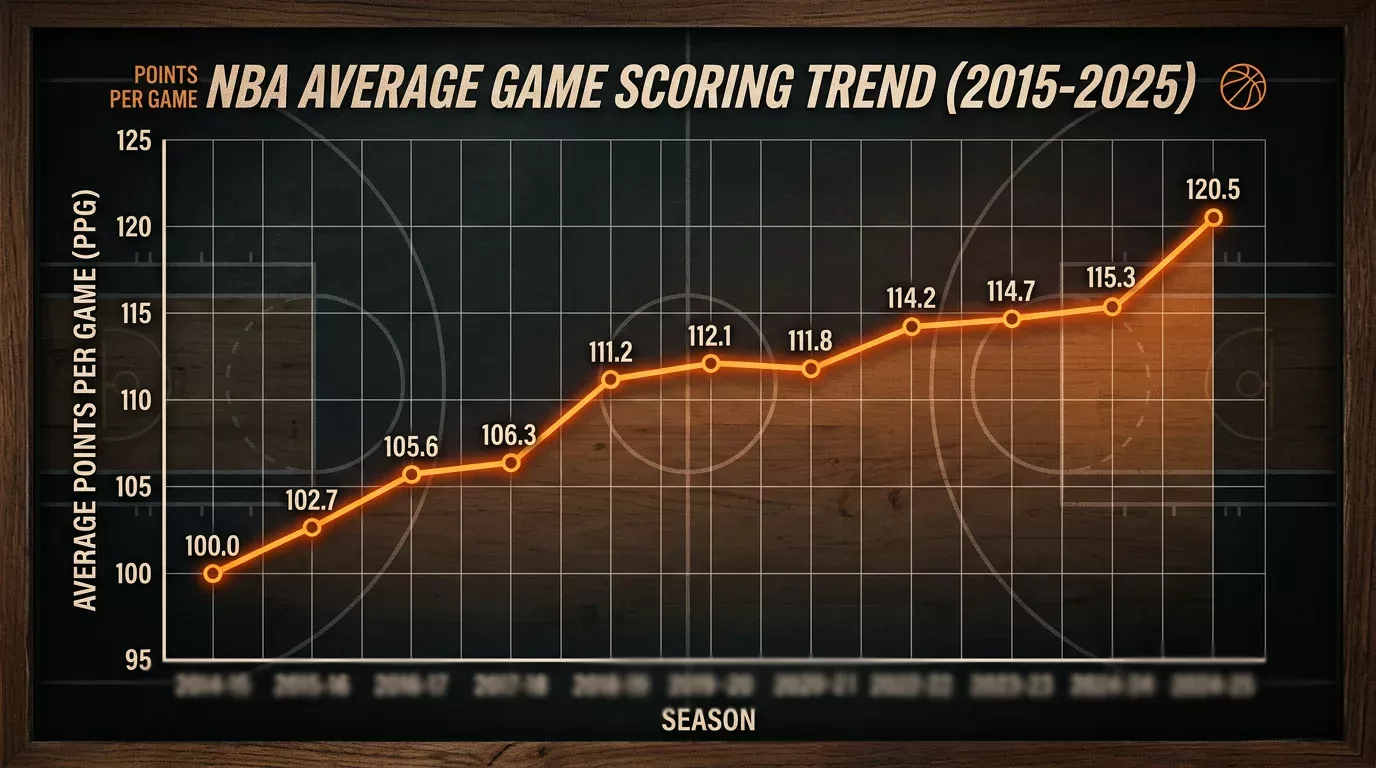
For totals betting in the playoffs, the directional bias shifts toward the under compared to regular season. Defensive intensity rises significantly in postseason play as teams game-plan specifically for each other, offensive possessions are executed more deliberately, and late-game pace slows further. Regular-season over/under models calibrated to 115+ pace environments will systematically over-project playoff game totals.
Are NBA spread lines more accurate in the playoffs than the regular season?
Yes, generally. Playoff markets attract more professional betting activity and higher stakes, which accelerates the price-discovery process. The closing line in playoff games is typically a more accurate probability estimate than the average regular-season closing line. This higher efficiency makes value harder to find, but it does not eliminate it — particularly in series betting and in games where fresh injury information has not yet been fully priced.
Can I bet on NBA series outcomes on UK bookmakers?
Yes. Most major UK-licensed bookmakers offer series winner markets (which team wins the series) for all first-round playoff matchups and progressively for subsequent rounds. Some also offer total games markets (does the series go to four, five, six, or seven games) and game-by-game spread and totals markets within series. The availability and depth of playoff markets expands significantly from the first round of the postseason onwards.
Published by the nba Bets of the day team.