NBA Rookie Betting Tips: How First-Year Players Affect Lines and Props
 Available in US
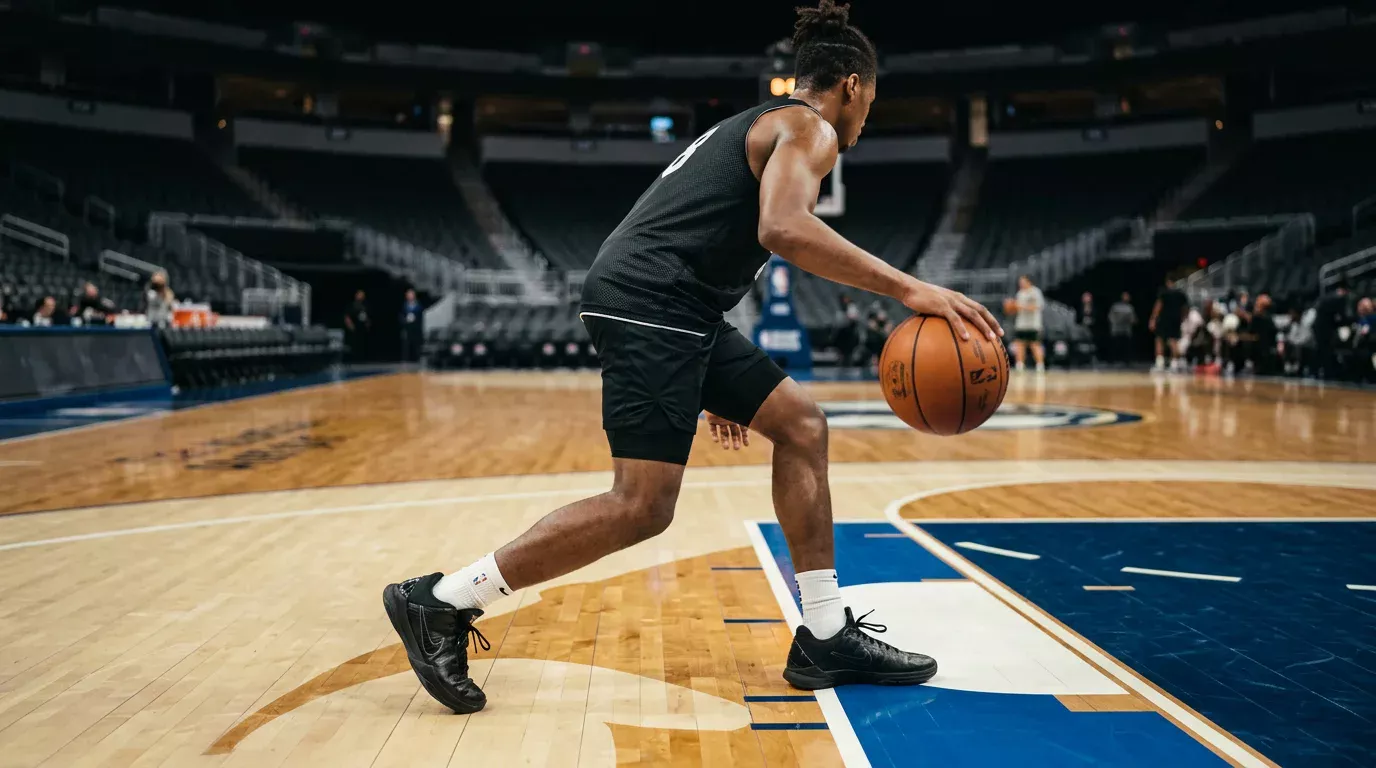
NBA Rookies and Betting: Why Books Struggle to Price First-Year Players Accurately
Rookie pricing is one of the most reliably mispriced categories in NBA prop markets, and it has been for as long as I have been betting basketball. The reason is structural rather than analytical laziness on the bookmaker’s part: there is simply less data on a first-year player than on any established NBA professional. The bookmaker is pricing off college stats, pre-draft scouting reports, and a handful of preseason games — a thin dataset against which to set an accurate minutes or performance line for an 82-game season.
Basketball’s growing UK profile amplifies this dynamic. The EY-Parthenon Sports Engagement Index recorded basketball rising to sixth place in UK engagement among adults aged 18-24 in 2026, and youth participation in basketball in England has grown by 65% since 2018 according to Basketball England data. That growing audience is increasingly aware of top prospects through college basketball and social media, but the depth of knowledge about player roles, minute projections, and rotation positioning is shallower than it is for established stars. The result is a prop market where the public’s enthusiasm for high-profile rookies sometimes pushes lines in one direction while the actual NBA role reality pulls in another.
The Rookie Wall: Statistical Evidence for the Second-Half Performance Dip
The “rookie wall” is one of the most discussed phenomena in NBA player development — and unlike many broadcast narratives, this one is supported by data. First-year players who handle significant minutes typically show a measurable performance dip somewhere in the February-to-March window, attributable to the cumulative physical and mental demands of a full professional schedule after a shorter college season.
The dip is most visible in offensive efficiency metrics: three-point percentage, turnover rate, and decision-making speed all show modest but consistent declines in the second half of the season for high-usage rookies. The magnitude varies by player — physically mature prospects drafted at age 21 or 22 show smaller walls than 18-year-old straight-from-high-school types — but the pattern appears often enough to be a systematic factor in prop market analysis.
For totals and prop betting, the implication is that a rookie’s performance props should carry a second-half discount relative to their first-half averages. A player posting 18 points per game in the first 40 games of their rookie year is not necessarily a reliable over on an 18-point prop line in game 60. Their rolling averages from the surrounding 10-15 game window are a better predictor of next-game performance than their season average, particularly in the February-April stretch.
Minutes Restrictions and Load Management for Young Players
High-usage rookie props — particularly points, rebounds, and assists lines — are significantly affected by minutes. A rookie playing 32 minutes per game has a fundamentally different statistical floor from one playing 22. And unlike veteran players whose minutes are predictable, rookie minutes are subject to coach discretion, development timelines, and positional competition in ways that veterans are not.
Tanking teams provide an interesting case study. A franchise clearly out of playoff contention in February has an incentive to increase rookie minutes for development purposes. The season-average stats may understate what that player is currently capable of producing, and their prop lines may be set below their true performance level for this phase of the season. Identifying these rotation inflections — the moment when a team decisively shifts toward playing their young roster heavily — can produce several weeks of prop value before the market adjusts the lines upward.
The reverse occurs on winning teams that add a high-profile rookie. The public’s enthusiasm for a star prospect leads to higher expected prop lines than the player’s actual minutes warrant on a veteran roster. A rookie playing 18-22 minutes behind established starters has prop lines that should reflect those minutes, but market pressure from high public interest sometimes inflates lines to levels that only make sense at 28-32 minutes. Fading this inflation — taking the under on high-profile rookies whose minutes do not support their prop lines — is one of the more consistent NBA prop edges available.
Rookie Prop Lines: Where Bookmaker Models Historically Miss
The specific categories where bookmaker models most consistently mishandle rookie props are three-point attempts and defensive statistics. Three-point attempt rates for rookies are particularly volatile: college shooting mechanics do not always translate immediately to NBA frequency, and a coach’s tactical preferences often override what a player’s college tendencies suggest. Prop lines for three-point makes or attempts that are based on college percentages without adjustment for NBA shot selection context are systematically mispriced in the early season.
Defensive stats — steals, blocks, defensive rebounds — are even harder to project for rookies because defensive performance is coaching-system-dependent in ways that offensive production is not. A rookie on a switch-heavy defensive scheme will generate different steal and block numbers from the same player in a drop-coverage system. The bookmaker’s model does not always fully account for scheme-specific adjustments, particularly for new signings or players who have changed teams through trade.
The most analytically productive approach to rookie props is to focus on the first three to four weeks of regular season play — the period when actual NBA performance data starts to establish a baseline — rather than relying on pre-season information. After 15-20 games, the picture of a rookie’s actual role and performance level is substantially clearer, and prop lines set from that actual data are more reliably valued. The methodology for evaluating whether that value is systematically above or below the line is covered in the guide on NBA player props analysis for UK bettors.
When does the ‘rookie wall’ typically hit NBA first-year players?
The rookie wall most commonly appears between game 45 and game 65 of the regular season, which typically falls in the February to March window. The timing varies by player — those with less NBA-level physical preparation tend to hit the wall earlier, while more physically developed prospects drafted at older ages may not show a clear dip. Monitoring rolling 10-game averages for any significant performance decline during this window is the practical way to identify when a specific player’s wall has arrived.
Are rookie prop lines available from the start of the NBA season on UK platforms?
Yes, most UK-licensed bookmakers with deep NBA prop markets offer rookie player performance lines from the opening week of the season. Initial lines are typically set from pre-season performance data, training camp reports, and draft position. The lines tend to be less precisely calibrated than veteran player lines at season open, and significant adjustments are common in the first 10-15 games as actual NBA minutes and performance data establish a more reliable baseline.
Created by the ”nba Bets of the day” editorial team.