NBA Betting Line Movement: How to Read Sharp Action and Closing Line Value
 Available in US
- NBA Line Movement: Why the Number on the Board Right Now Is Not the Number That Opened
- What Moves an NBA Line: Injury News, Sharp Action, and Public Money
- Reverse Line Movement: When the Line Goes Against the Betting Majority
- Closing Line Value: The Professional Benchmark for Long-Term NBA Betting Success
NBA Line Movement: Why the Number on the Board Right Now Is Not the Number That Opened
The first time I tracked opening and closing lines side by side across a full NBA week, the results were genuinely surprising. Some games moved half a point. Others moved three points or more. A handful barely moved at all. I had assumed lines were fairly static — set by the bookmaker and adjusted only for injury news. What I found was a continuous pricing process driven by information flows I had not been tracking at all.
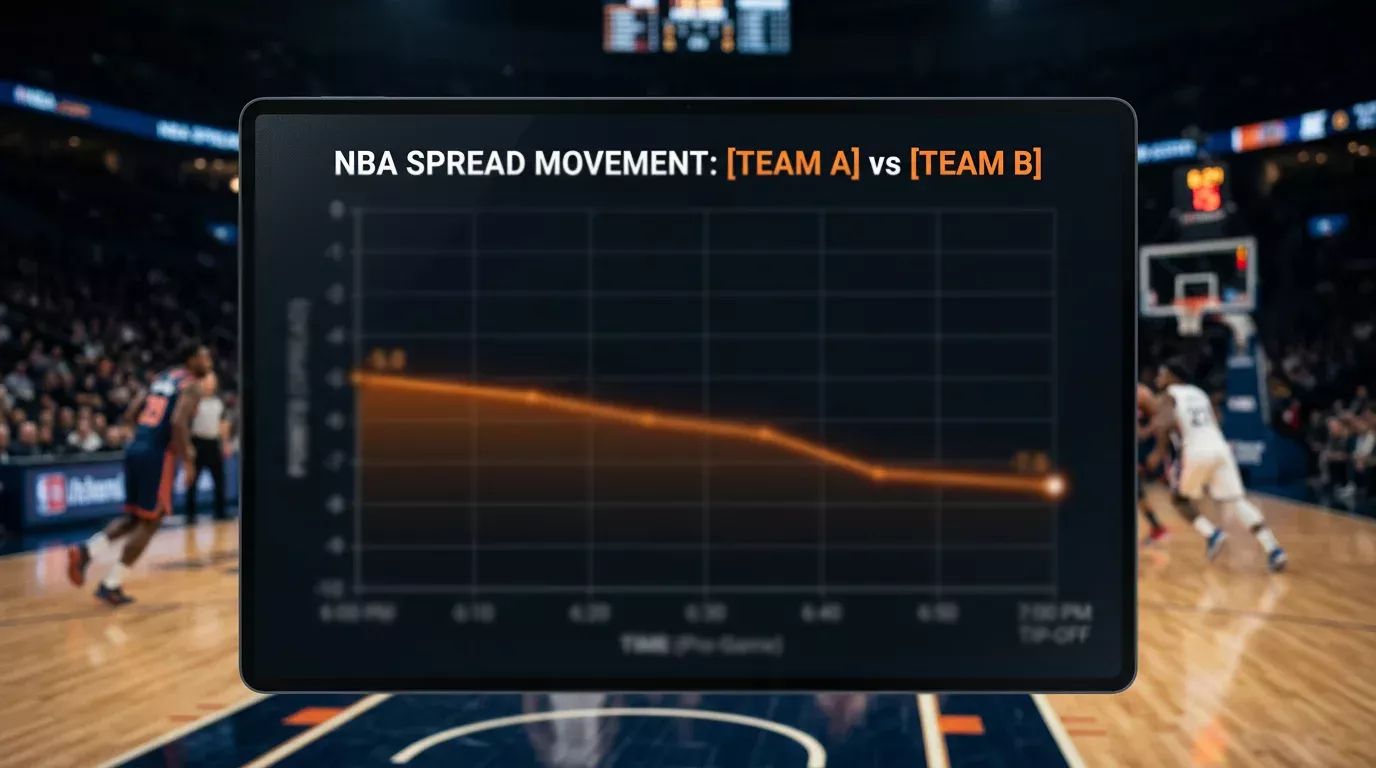
The NBA spread line or total that opens on a UK platform represents the bookmaker’s initial view, calibrated to attract balanced action and reflect known information at posting time. What happens between opening and close — which can be two to five days for scheduled games — is a price discovery process driven by three main forces: sharp bettor action, injury and roster news, and public money. Each force moves lines in different ways and at different speeds, and learning to distinguish between them is one of the most practically useful skills in NBA betting.
Platforms tracking NBA lines at scale — some processing hundreds of millions of odds changes daily — provide the raw data for this analysis. The pattern in that data reveals where the market is efficiently priced and where residual value remains for bettors who understand what is driving the movement.
What Moves an NBA Line: Injury News, Sharp Action, and Public Money
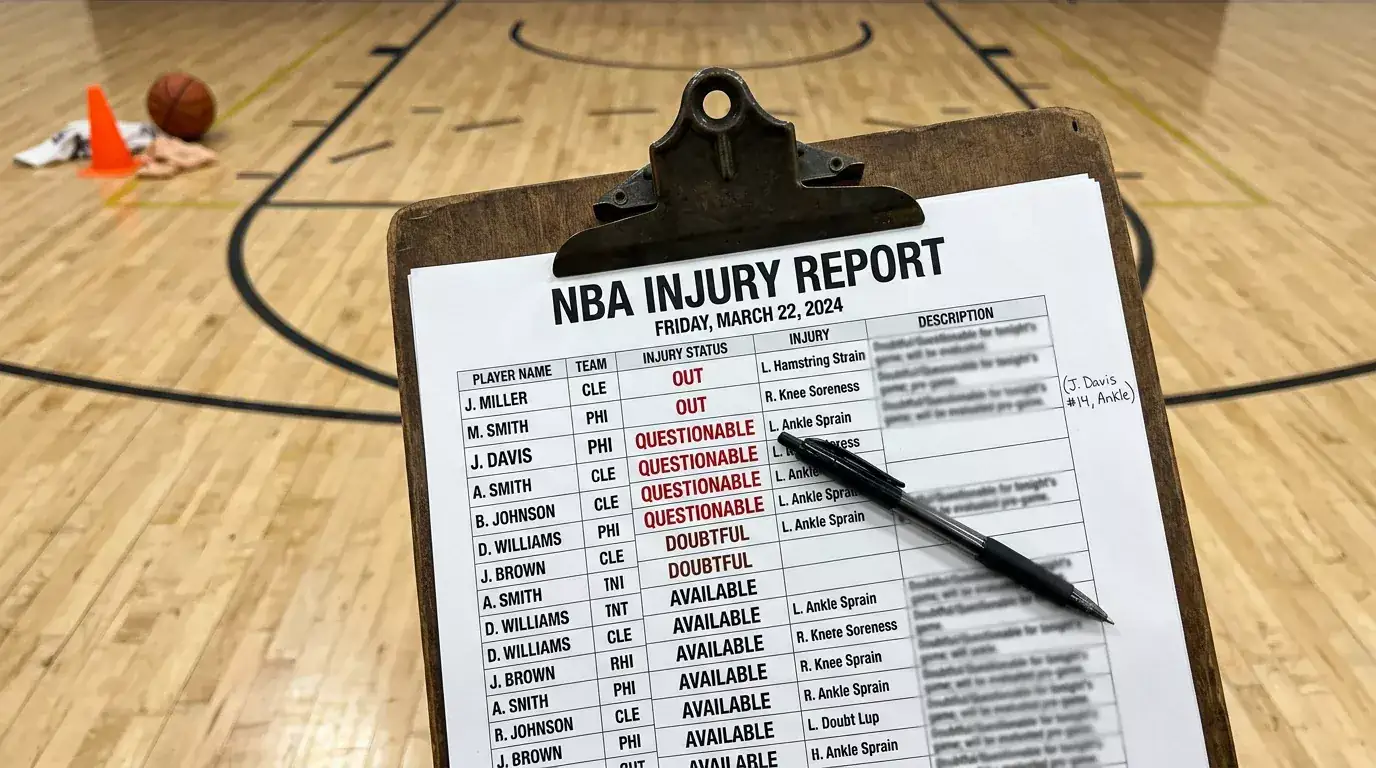
Injury news produces the fastest and most predictable line movement. A confirmed absence of a significant player typically moves the spread 2-5 points within minutes of the information becoming public, depending on the player’s impact and the game’s overall market. This movement is almost always immediate and fully absorbed quickly. Attempting to act after confirmation is usually too late unless you are within seconds of the news breaking.
Sharp action — large bets from professional or semi-professional bettors whose track record the bookmaker has identified as reliable — moves lines more slowly and subtly. A sharp bettor placing £2,000 on one side of a game moves the line not because the bookmaker fears the individual bet, but because the bookmaker interprets the bet as evidence that the sharp has identified mispricing. Moving the line reduces exposure and acknowledges the information signal. This is why lines sometimes move on low overall volume — a single large, credible bet can shift the price more than many small public bets in the same direction.
Public money moves lines in proportion to volume rather than quality. Before marquee games — Finals rematches, Christmas Day games, prime-time national broadcasts — large amounts of public money flow into the favourite, pushing their spread shorter and often creating value on the underdog. This is a systematic pattern, not a coincidence. The public consistently overweights recognisable teams and high-profile players, creating a structural bias toward certain favourites being overpriced. Reverse line movement — explained in the next section — is the most useful tool for identifying when this public bias is creating value.
Reverse Line Movement: When the Line Goes Against the Betting Majority
Reverse line movement is one of the most instructive signals in NBA betting. It occurs when a line moves in the opposite direction from what the public betting percentages would predict.
Normal pattern: 70% of bets are on Team A, so the spread on Team A shortens (they have to win by more for bets on them to pay). Reverse line movement pattern: 70% of bets are on Team A, but the spread on Team A lengthens — they are being given more points, not fewer. This counterintuitive movement signals that sharp money on Team B, despite representing a smaller volume of bets, is large enough and credible enough to move the line in the opposite direction from the public flow.
For practical NBA betting, reverse line movement is a useful filter rather than a standalone signal. A bet I was already considering on Team B becomes more compelling if I see the line moving in Team B’s direction despite public money going the other way. It is corroborative evidence that my analysis is aligned with the sharper money in the market. It is not, by itself, a reason to bet on a team I had not already identified analytical reasons to back.
Closing Line Value: The Professional Benchmark for Long-Term NBA Betting Success
Closing line value (CLV) is the difference between the odds at which you placed a bet and the odds available at tip-off. If you backed Team A at -3 on the spread and the line closed at -5, you beat the closing line by two points — positive CLV. If you backed at -3 and the line closed at -2, you got a worse price than the final market — negative CLV.
The reason CLV matters is straightforward: the closing line is the most information-efficient price available, incorporating everything the market knows about the game at the last possible moment. If you are consistently betting at better prices than close, you are extracting value that the market eventually eliminates. If you are consistently at worse prices than close, your analytical process is behind the market rather than ahead of it, and your long-run results will reflect that regardless of short-run win-loss variance.
For UK NBA punters, tracking CLV requires recording the odds at the time of placement and noting the closing odds from a reliable source. The spread and total at close for most NBA games is documented on odds history platforms. Over 50-100 bets, a consistent pattern of positive or negative CLV is a more reliable indicator of betting quality than your win-loss record or your actual P&L — because those measures are contaminated by variance. CLV isolates the process quality from the outcome variance. The full exploration of how this metric interacts with EV analysis is in the guide on NBA spread betting tips for UK bettors.
What is reverse line movement in NBA betting?
Reverse line movement occurs when the spread or total moves in the opposite direction from the majority of public bets. Normally, a market bet heavily on one side causes the line to adjust against that side. When the line moves the other way despite the public betting pattern, it signals that sharp (large or professional) money is backing the opposite side with enough conviction to override the public flow. This is often interpreted as a signal that sharp bettors have identified value on the side receiving the reverse movement.
How do I track NBA line movement from UK bookmaker platforms?
Most UK bookmaker platforms do not show opening lines or line history directly in the betting interface — they display current prices only. For line movement tracking, odds comparison sites that record historical NBA prices provide the most accessible solution without specialist software. Recording the spread at the time of your analysis and comparing it to the closing price after the game is the simplest method for tracking your own CLV over time.
Created by the ”nba Bets of the day” editorial team.